


How Many Dudes?
Butterscotch Shenanigans
How Many Dudes? is the kind of strategy game that makes a simple question feel like a serious tactical problem: how many fighters do I need before a ridiculous battle stops being ridiculous and starts being winnable? I found its appeal in that tension. It is built around recruiting a growing army of “Dudes,” then making sensible choices inside a roguelike structure where each run asks me to adapt rather than follow one permanent plan.
That combination gives it a very different mood from a traditional military strategy game. I am not managing a realistic nation, studying a long technology tree, or waiting for a grand campaign to unfold. Instead, I am trying to turn a strange collection of recruits into a force that can survive the next encounter. The humor keeps the presentation light, but the decisions still matter. The best way to approach it is as a compact decision-making game disguised as a chaotic army builder.
Developed by Butterscotch Shenanigans, this paid strategy title costs $9.99 and is aimed at Teen players. It has a 4.3 average from around 950 ratings, with more than 100K installs, so it has already attracted a noticeable audience without feeling like an anonymous mass-market release. I tested it with the mindset of a first-time player, paying particular attention to how quickly the central loop becomes understandable and whether the humor gets in the way of useful decisions.
What a first-time player should expect
The opening idea is easy to grasp: build a Dude army, send it into battles, and make choices that improve the chances of surviving the run. The roguelike format means I should not expect every attempt to develop in the same way. A promising run can become awkward after one poor decision, while an ordinary beginning can turn into a surprisingly effective force if I recognize what the current army needs.
That unpredictability is important because it changes the goal of each session. I am not simply trying to repeat a memorized sequence. I am reading the situation, deciding whether to strengthen what already works or cover a weakness, and accepting that a run may end before I have built the army I imagined. Players who enjoy adapting under pressure will probably understand the attraction quickly.
Related News






Players who prefer calm, transparent planning may need more patience. The game’s deliberately silly identity suggests that it is comfortable with exaggeration and disorder. If you want a clean spreadsheet-style strategy experience where every variable is explained before you act, this is probably not the best match. Its pleasure comes from making an imperfect plan, watching it meet resistance, and adjusting before the next battle.
The store’s short description asks, “How Many Dudes?” That question is more than a joke. It points toward the game’s central trade-off: adding more bodies can feel powerful, but a larger group is not automatically a smart solution to every problem. I learned to treat recruitment as a decision rather than a reflex. The useful question is not only whether I can add to the army, but whether the next addition improves the way the whole group functions.
Because it is a paid game, the purchase also sets a clear expectation. I am paying for the experience rather than entering a free download built around constant prompts to spend. That makes it easier to settle into a session, although the upfront cost means I would still recommend watching a little gameplay first if you are unsure about roguelike repetition or deliberately comic strategy.
Gallery
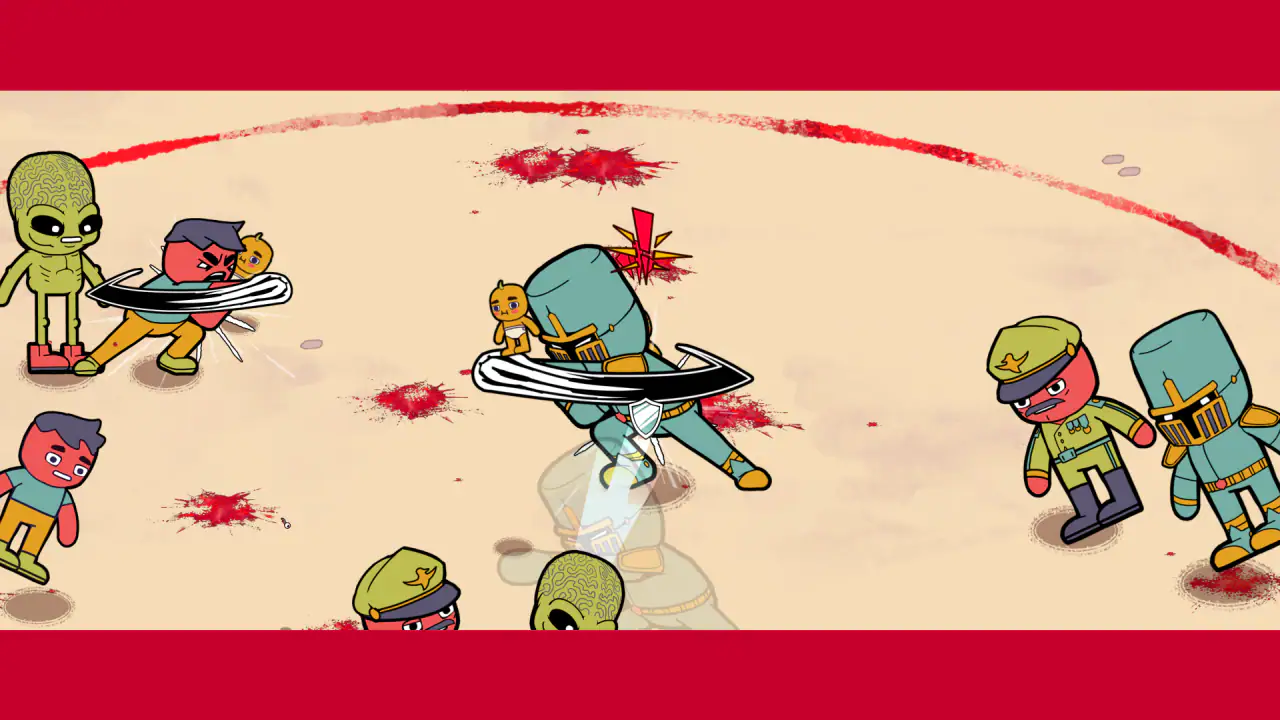
Starting without overthinking the army
My advice for the first run is to resist the urge to create a perfect build immediately. The early objective should be learning how the game presents choices and how much information it gives before a battle. I paid attention to what changed after recruitment, what seemed to influence the next encounter, and which decisions were permanent for the current run. That approach was more useful than trying to predict the entire path from the opening.
A first-time player can also use the initial attempt as a test of personal preference. Do you enjoy making a choice with incomplete certainty? Are you comfortable abandoning a promising idea when the next battle exposes a weakness? If the answer is yes, the roguelike structure should feel motivating. If you dislike losing progress or repeating an opening, the same structure may feel like friction rather than challenge.
I found it helpful to keep the first session short in my head, even if I continued playing. Instead of treating the first run as a final examination, I treated it as reconnaissance. That mindset removes pressure and makes failures informative. It also helps reveal whether the game’s humor and army-building loop are enough to keep you interested beyond the novelty of the premise.
From installation to the first meaningful success
What to do when the game opens
How Many Dudes? runs on Android devices using version 8.0 or later. Once installed, I would begin by reading each choice carefully rather than tapping quickly because the presentation looks playful. A ridiculous name or visual gag can make an option seem disposable, but in a strategy game the important detail is what that choice does for the current army.
The first useful habit is to separate immediate strength from long-term usefulness. A recruit or improvement that looks impressive at once may not solve the problem likely to appear in the next encounter. Conversely, a less exciting choice can give the army a better foundation. I started asking myself what the group was currently missing before choosing the option that looked funniest or largest.
Do not worry about making the first run perfectly efficient. The game becomes easier to understand when I observe the connection between a decision and its consequence. If an army struggles after I focus too narrowly on one kind of improvement, that is valuable information for the next attempt. The roguelike format makes experimentation part of the process, not evidence that the game has been played incorrectly.
How the first successful action feels
The first meaningful success is not simply adding another Dude. It is making a choice for a reason, entering the next battle, and seeing the army handle a problem that I recognized beforehand. That moment gave the recruiting loop more weight. I was no longer collecting units because the number was going up; I was shaping a response to what the run had shown me.
For a practical first-session routine, I would use this sequence:
Look at the current army and identify its most obvious weakness.
Choose the option that addresses that weakness without abandoning everything already working.
Enter the next battle with one expectation about what the choice should improve.
After the result, decide whether the problem was the choice itself or the larger direction of the run.
This simple process creates a feedback loop. It also prevents a common mistake: changing too many things at once and then having no idea why the outcome improved or worsened. Even in a game built around absurd battles, I got better results when I made one clear adjustment and watched for its effect.
A realistic everyday use case is a short evening session after work or school. I can start a run, make a few deliberate decisions, and stop after a battle without needing to remember a complicated campaign story. If I return later, the previous run still gives me a question to investigate: should I recruit more aggressively, protect the existing army’s strengths, or take a risk that could produce a better direction?
Why the army count is not the whole strategy
The most obvious temptation is to assume that a bigger army always wins. I found that thinking too narrowly about quantity can hide the more interesting part of the game. A growing force only helps if the choices around it make sense. Recruitment should be connected to the run’s needs, not treated as a score that must rise at every opportunity.
This is one of the game’s more useful lessons for new players: do not confuse visible progress with effective progress. A larger group feels satisfying, but a smaller adjustment that fixes a repeated weakness can be more valuable. The trade-off becomes especially important when a choice offers immediate excitement but pushes the army away from a balanced or coherent direction.
That does not mean I should always play safely. Roguelike games are often at their best when a calculated risk creates a new possibility. The key is recognizing whether the risk is deliberate. I would take a strange option when I could explain what I hoped it would accomplish, but I would avoid selecting it only because the description sounded amusing.
Common confusion and the friction behind it
When a failed run feels unfair
A failed battle can initially feel confusing if I have not yet learned which parts of the army matter most. My first reaction may be to blame the latest decision, even though the real problem began several choices earlier. That is a normal difficulty with run-based strategy: consequences can arrive after the decision that caused them.
To make failures more useful, I look back at the direction of the army rather than focusing only on the final encounter. Did I keep adding to one strength while ignoring another? Did I choose short-term power when the run needed stability? Did I assume that a large group would cover every weakness? These questions turn a loss into a practical adjustment for the next attempt.
The game may not suit players who need every defeat to feel immediately explainable. Some people enjoy discovering systems through trial and error; others want a detailed explanation before committing to a choice. How Many Dudes? leans toward the first audience. Its comic framing makes experimentation inviting, but the cost is that a new player may need several attempts before the decisions feel fully legible.
Why more recruits can create a worse decision
Another point of confusion is the difference between recruiting often and recruiting well. The premise naturally encourages me to chase a larger army, yet the meaningful decision is what each addition contributes to the current run. I became more careful when I noticed that the most satisfying choices were not always the ones that produced the biggest immediate increase.
A useful rule is to pause whenever a recruitment option appears and ask what happens if the next battle attacks the army’s weakest area. If the answer is “I have no response,” then adding more of the same may be a poor choice. This is a small but important shift in thinking, and it is one of the game’s strongest lessons for someone coming from simpler idle or collection-focused titles.
How it differs from more familiar strategy games
Compared with a traditional turn-based strategy game, this is less about controlling a map over a long campaign and more about making a sequence of run-specific decisions. I do not approach it like a board game with a stable opening strategy. I approach it like a series of tactical experiments, where the current army and the next challenge define what matters.
Compared with an idle army game, it asks for more attention. I cannot rely on the army growing in the background while I make occasional upgrades. The appeal is in choosing, observing, and adapting. Players who want a passive progression loop may find the decisions unnecessary, while players who want a full-scale tactical simulation may find the presentation too playful and the sessions too focused on the run.
It also differs from a conventional roguelike that emphasizes a lone hero. The army itself is the object of attention, so I think in terms of composition and collective strength rather than one character’s equipment or personal skill. That changes the emotional rhythm: success feels like the group has come together, while failure can feel like I built the wrong kind of group for the problems ahead.
Practical device and audience considerations
The Teen content rating is worth taking seriously if you are choosing the game for a younger player. The tone is comic, but the battles and presentation are still aimed at that age category rather than being positioned as a children’s game. I would also remember that the game is available for Android from version 8.0 onward, so compatibility should be checked against the device before purchasing.
The current version is 100.0.911, which is useful to know when comparing what you see with older videos or discussions. A first-time player should judge the experience on the version available now rather than assuming every older explanation still matches the interface or balance. I would also keep expectations realistic about the price: at $9.99, this is a deliberate purchase for people who enjoy the specific loop, not a casual free trial I would install and forget.
Who will enjoy it and who should skip it
I would recommend How Many Dudes? to players who like strategy with a strong personality. It is a good fit if you enjoy making choices under uncertainty, learning from failed runs, and watching a strange army develop into something more effective than it first appeared. The humor gives the decisions a lighter surface, but the underlying satisfaction comes from recognizing patterns and correcting mistakes.
It is especially suitable for someone who wants a game that can be played in focused sessions rather than a huge campaign requiring a long uninterrupted commitment. The run-based format gives each attempt a clear shape. I can also imagine recommending it to a friend who has grown tired of realistic military themes but still wants to think about composition, risk, and adaptation.
I would skip it if you want a story-led adventure, a competitive multiplayer environment, or a slow city-building experience. I would also hesitate to recommend it to anyone who dislikes restarting after failure. The game’s identity depends on runs changing and plans collapsing. That is the source of its replay value, but it is also the main reason it may not feel relaxing to every strategy player.
Players who prefer highly predictable progression may be happier with a classic tactics game. Players who want constant passive growth may prefer an idle title. How Many Dudes? occupies a narrower space: it wants me to laugh at the army while still thinking carefully about what the army needs next.
My recommendation after learning the loop
After spending time with it, I think the strongest way to enjoy the game is to treat each run as a conversation between the army I want and the challenges the game gives me. I begin with a plan, but I do not cling to it. I watch for the first sign that the plan is failing, then make the smallest useful change before turning the run into a completely different experiment.
That approach also answers the practical question of whether the purchase is worthwhile. If the idea of building a ridiculous force, testing it, and refining your judgment sounds entertaining, the $9.99 price is easier to justify. If you are only interested in the joke of recruiting a huge crowd, the novelty may not carry you far enough. The lasting value is in the decisions beneath the joke.
My final tip is to define success more broadly than reaching the end of a run. A successful session can be the first time you identify why an army failed, discover that quantity was not the answer, or make a risky choice that teaches you how the system reacts. Those small discoveries make the next attempt more purposeful and help the game feel less like repetition.
How Many Dudes? is not trying to replace every other strategy game, and that is part of its charm. It offers a focused, humorous take on army building where the route to victory depends on adapting rather than blindly accumulating. With a 4.3 average from around 950 ratings and over 100K installs, it has enough player interest to stand out, while its paid format makes the decision to try it more intentional.
I would recommend it to a first-time player who is willing to learn through experimentation. Start by observing, make one meaningful adjustment, and let the next battle tell you whether the army is becoming smarter or merely larger. If that kind of playful trial and error sounds appealing, this unusual strategy game has a clear chance of becoming a very enjoyable tactical habit.
FAQs for How Many Dudes?
What is How Many Dudes?
How Many Dudes? is a casual counting and estimation game built around a simple but entertaining challenge: looking at a scene and figuring out how many characters, or “dudes,” are present. It is easy to understand from the first round, but later levels can become surprisingly tricky as characters overlap, appear at different sizes, or are placed among distracting objects. The game is designed for short, relaxed play sessions.
How do you play How Many Dudes?
The main objective is to inspect the screen carefully and select or enter the number of dudes you believe are shown. After submitting your answer, the game reveals whether your estimate was correct and usually provides feedback based on your accuracy. The controls are straightforward, so there is no complicated tutorial to complete. Success depends mostly on concentration, visual counting, and avoiding rushed answers.
Is How Many Dudes? suitable for children?
How Many Dudes? is generally easy for children to understand because its central mechanic is based on counting and visual observation. Younger players may enjoy the playful presentation, while adults can treat it as a quick puzzle or brain-training diversion. Parents should still review the app-store age rating, advertising policy, and any available privacy information before allowing children to use it, especially if the device belongs to a minor.
Does How Many Dudes? require an internet connection?
The basic counting gameplay may work without a continuous internet connection, which makes How Many Dudes? convenient for quick sessions while traveling or when mobile data is unavailable. However, certain features—such as advertisements, analytics, online rankings, updates, or in-app content—may depend on connectivity. Because requirements can change between versions and platforms, it is best to test the installed version in offline mode rather than assuming every feature will remain available.
Is How Many Dudes? free to download, and does it contain ads or purchases?
How Many Dudes? may be available as a free download, but the exact monetization model can vary between the Android and iOS versions and may change after updates. Free editions commonly support development through advertisements, while some versions can include optional purchases or an ad-removal upgrade. Before downloading, check the current store listing for in-app purchase details, permissions, subscription terms, and whether a paid version is offered.
Pros
- Simple controls make it easy to start playing immediately.
- Short rounds are ideal for quick breaks or casual sessions.
- The humorous premise gives the game a distinctive personality.
- Lightweight gameplay is suitable for a wide range of mobile devices.
- Progress feels rewarding as you improve your timing and accuracy.
Cons
- The core gameplay can become repetitive after extended sessions.
- Limited depth may not satisfy players seeking a long-term challenge.
- Some levels may feel frustrating when precision is required.
- Replay value depends heavily on personal enjoyment of the concept.
- The game may be less appealing to players who prefer strategic gameplay.


